
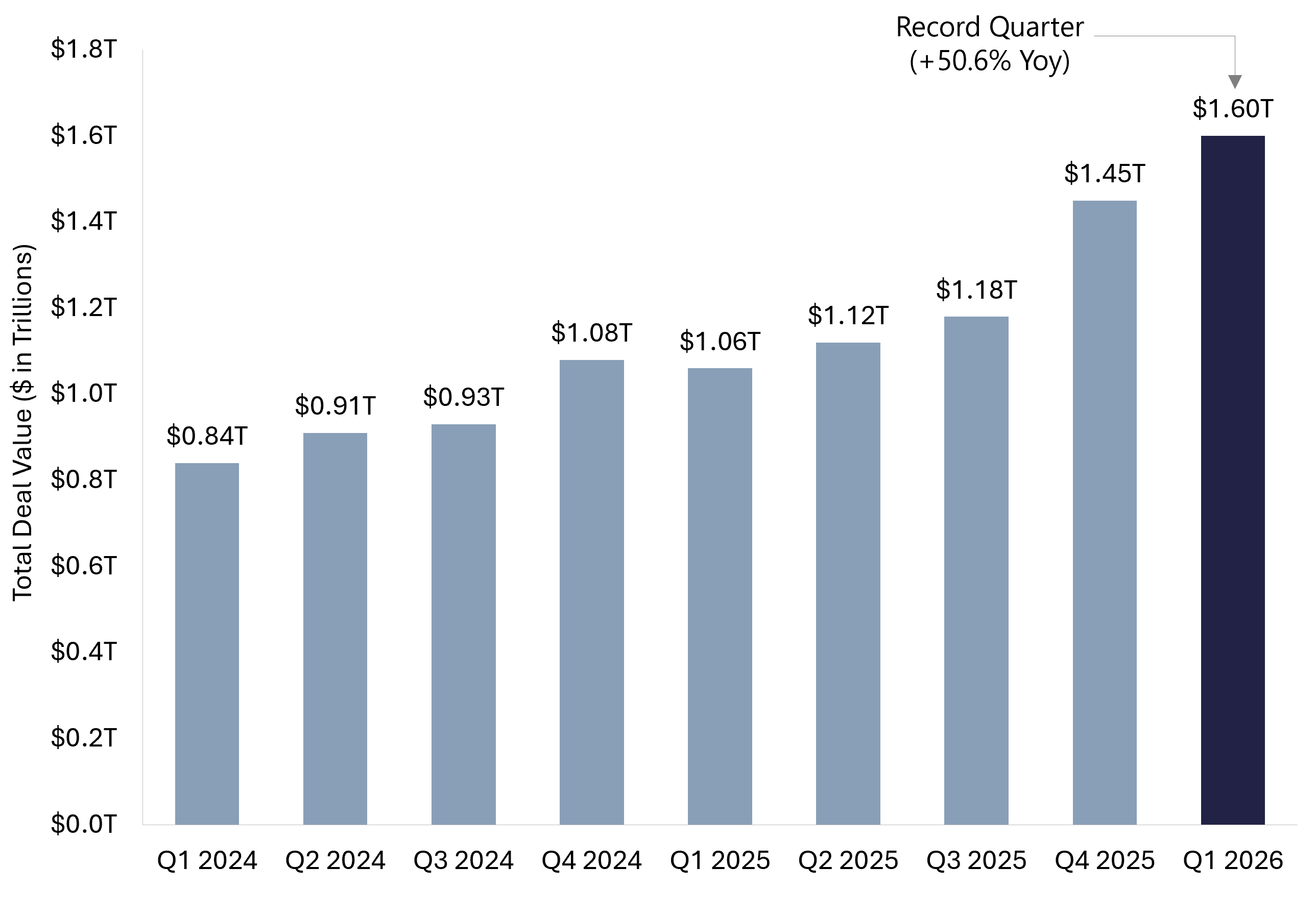
Global M&A activity reached a quarterly record in Q1 2026. Total deal value hit an estimated $1.6 trillion, up 50.6% year-over-year, and the surge was led by technology M&A. Tech deal value rose roughly 31% in March 2026 alone to $150.4 billion. For founders of SaaS, ecommerce, agency, AI, cybersecurity, edtech, fintech, and marketplace app businesses, the window to a strong exit is wider open than it has been in years.
Opportunity converts into outcome only when the seller picks the right path to market. Two names come up regularly when tech founders research how to sell: FE International and Acquire.com. They sound similar at first glance, but they operate on fundamentally different models, serve different segments of the market, and produce very different outcomes for sellers in the $1M to $100M+ range.
This guide breaks down the comparison across every dimension that moves a final sale price: service model, track record, vertical depth, buyer quality, confidentiality, and deal execution. It also covers where the FE International marketplace fits in for smaller tech businesses, and what the 2026 M&A environment means for founders considering an exit this year.
Two Different Models, Two Different Outcomes
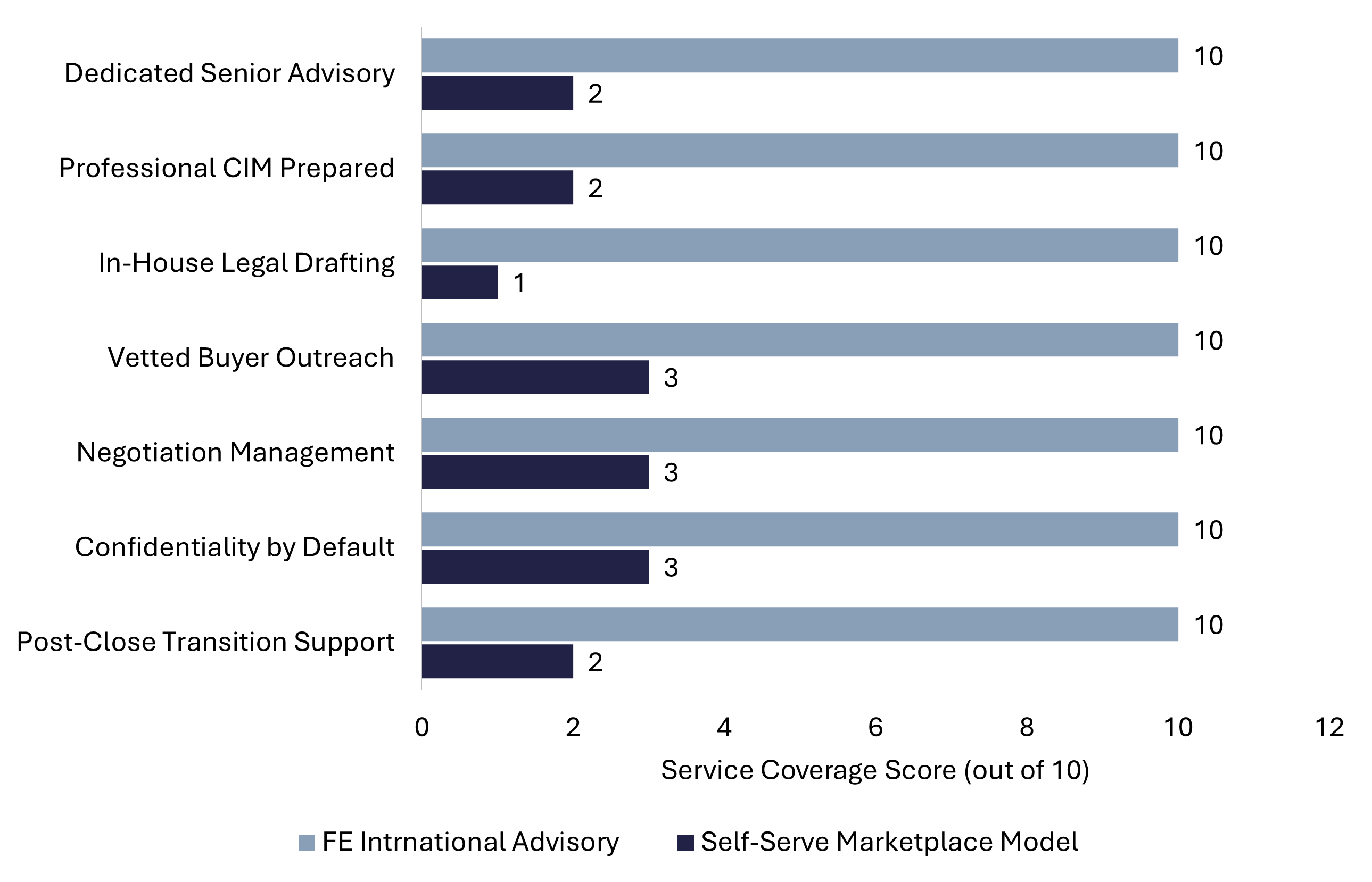
The headline difference is structural. FE International is a full-service M&A advisory firm founded in 2010, and a dedicated senior advisor is assigned to every engagement. The firm has completed over 1,500 transactions with a combined value exceeding $50 billion, operates with a 94.1% success rate, and maintains offices in New York, San Francisco, Miami, London, Mumbai, and Warsaw. For founders building businesses worth $1M to $100M+, FE International's advisory practice manages the full transaction end-to-end: senior advisor assignment, professional Confidential Information Memorandum (CIM) preparation, buyer outreach across a vetted global network, negotiation, deal structuring, in-house legal, due diligence, escrow facilitation, and post-close transition.
Acquire.com positions itself as a self-serve marketplace for buying and selling startups. Sellers create listings, set their own asking price, and manage most of the sales process themselves. The marketplace model relies on inbound buyer interest rather than a structured outreach process led by a dedicated advisor.
Here is the simplest way to frame it: FE International is your advisory team. A self-serve marketplace is your listing platform. One manages the entire transaction on your behalf, including the parts most founders have never done before. The other gives sellers tools and visibility, then asks them to run the process themselves.
For founders selling a tech business worth $1M or more, the difference between these two models has direct financial consequences. The academic evidence is consistent. Analysis of thousands of private company transactions found that sellers who hired M&A advisers received meaningfully better deal valuations, even after accounting for selection effects. Better positioning, broader buyer outreach, and stronger negotiating leverage show up in the final number.
FE International built the marketplace channel precisely because not every business needs the full advisory experience. For tech businesses under $1M, the FE International marketplace gives founders a faster, more flexible path to exit, with curated buyers and human support available when they need it. The two channels work together: one platform, one company, two paths to the right outcome.
The 94.1% Success Rate That Sets the Industry Standard
The most important number in any M&A conversation is the one most platforms avoid: success rate. How likely is it that a business listed actually closes?
FE International reports a 94.1% success rate across more than 1,500 completed transactions, with combined deal value exceeding $50 billion. That figure is not a marketing claim; it reflects an operating model built around quality control at every stage. FE turns down over 90% of the businesses that approach it, taking on only mandates that pass rigorous pre-marketing diligence. That selectivity is one reason the firm has been recognized as a Financial Times Fastest Growing Finance Company in America for six consecutive years and an Inc. 5000 honoree across eight consecutive years (2017-2024).
Self-serve marketplaces, by design, do not publish comparable success rates. The structural difference between an advisory model and a listing model shows up in how each operates: an advisor owns the outcome end-to-end, while a marketplace provides the platform and leaves execution to the seller. That structural difference is one reason FE’s success rate is the number worth benchmarking against.
The track record matters in practical terms because buyers (especially institutional buyers) pay attention to which advisor brought them the deal. A 1,500-deal database gives FE International two structural advantages. The first is pricing precision: every valuation FE produces draws on real transaction comparables across SaaS, ecommerce, agency, AI, cybersecurity, edtech, fintech, and marketplace apps. The second is buyer signaling. When FE brings a deal to a PE firm, family office, or strategic acquirer, the recipient knows the business has already passed rigorous diligence. That credibility shortens the buyer’s evaluation cycle and improves competitive tension. Recent FE International client outcomes span verticals: HealthIM’s acquisition by Pender Software Holdings, Evalart’s acquisition by Noosa Labs in HR tech, and the DropFunnels exit to a strategic buyer in the WordPress ecosystem are recent examples of the firm running competitive processes across SaaS, HR tech, and content tooling.
The market backdrop reinforces this advantage. In 2026, dealmaking is being shaped by buyers focused on quality rather than volume. That favors sellers represented by an advisor whose name carries weight, and whose process delivers clean data, clear positioning, and credible buyer competition.
Vertical Specialization Across the Full Tech Stack
Generalist marketplaces list businesses across every category. Breadth helps buyers who want variety, but it limits the platform’s ability to deliver deep vertical positioning for sellers.
FE International took the opposite approach. The firm has built dedicated vertical teams across seven technology sectors: SaaS, AI, Cybersecurity, EdTech, FinTech, Ecommerce, Agency & Marketing Solutions, and Marketplace Apps. Each team includes advisors with specific expertise in that vertical’s valuation drivers, buyer landscape, and deal-structure norms.
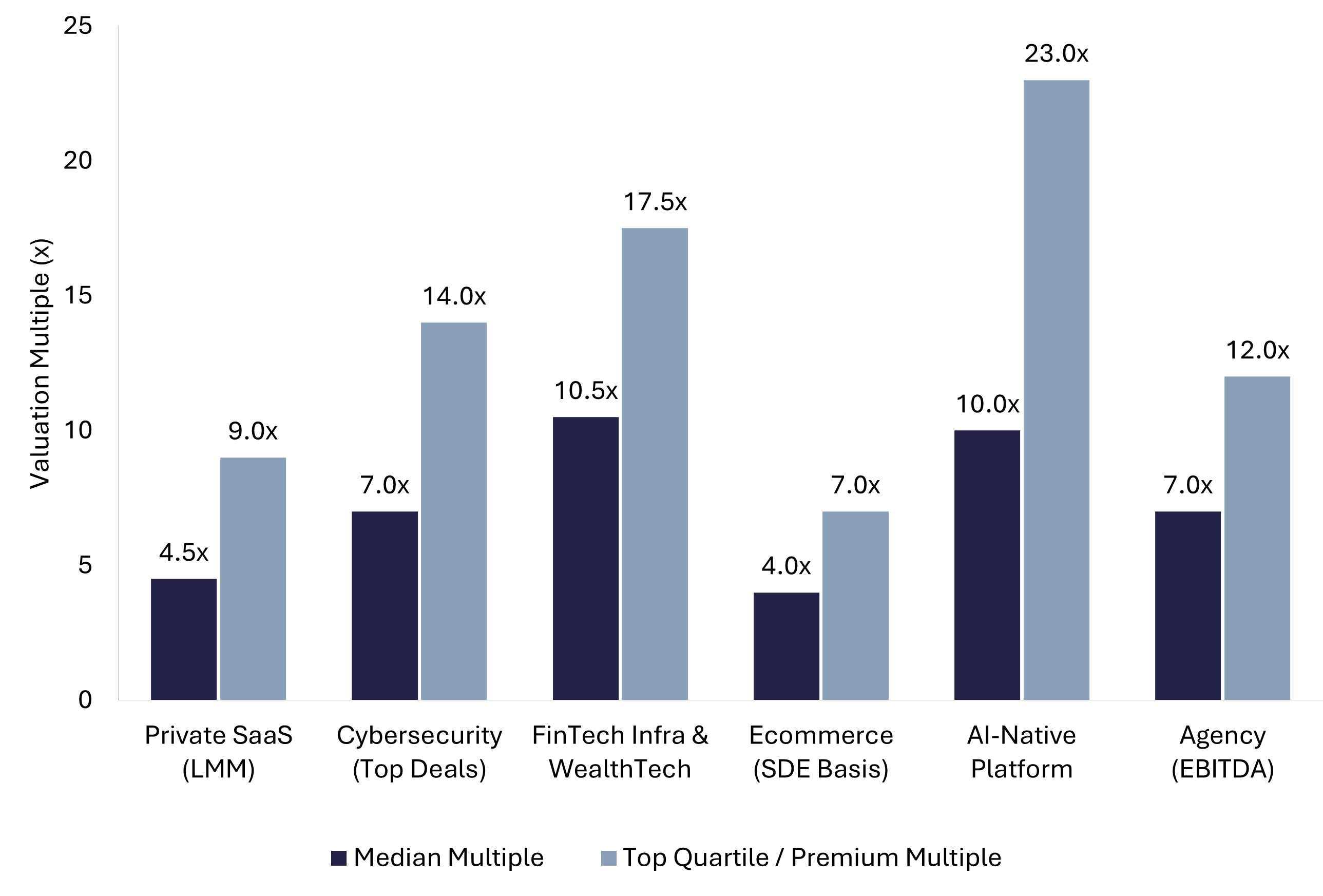
Why this matters: the metrics that drive valuation are different in every vertical. A SaaS business is valued on ARR, NRR, Rule of 40 performance, and gross margin. Private SaaS multiples are running roughly 3x-7x ARR in the lower middle market in 2026, with companies clearing Rule of 40 above 50 and NRR above 120% closing at 7x-9x ARR. A cybersecurity business with strong AI-native capabilities can command premium multiples; global information security spending is projected to reach $240 billion in 2026, up 12.5% year-over-year, which is structural fuel for buyer competition. FinTech valuations swing by subsector: payments at 4x-6x revenue, infrastructure platforms at 8x-15x+, lending platforms at 2x-4x.
Agency businesses are valued on EBITDA margins above 20%, client retention above 85%, retainer-based revenue mix, and management depth. AI businesses are evaluated on data moats, AI-native product positioning, and a clear dichotomy emerging in 2026: companies viewed to benefit from AI tailwinds are seeing outsized multiples and competitive deal activity, while companies where AI is viewed as a detractor face a much narrower bidder pool.
A self-serve marketplace cannot replicate this depth. When a seller lists a business, the marketplace does not bring vertical expertise to the valuation, the positioning, or the buyer matching. FE International publishes annual market reports across each vertical, giving founders data-driven insight into valuation trends and M&A activity before a deal process even starts.
For buyers, the same specialization translates into better deal sourcing. The FE International marketplace gives buyers direct access to vetted listings across SaaS, ecommerce, fintech, cybersecurity, edtech, AI, and agency verticals, with verified financials and operational summaries that let serious acquirers evaluate opportunities quickly.
Ecommerce-Specific Strengths
Ecommerce deserves a separate callout because it is one of the most active segments in tech M&A and one where vertical expertise matters most. Ecommerce sector M&A activity rose 12.8% year-over-year to 97 transactions in 2025, and well-prepared digitally-native brands continue to attract competitive sale processes in 2026. FE International’s ecommerce advisory team covers Amazon FBA brands, DTC Shopify stores, hybrid omnichannel brands, and subscription ecommerce models. The team understands the metrics that move ecommerce valuations: gross margin, repeat purchase rate, channel diversification, traffic source mix, and customer acquisition cost. Buyers in this space, including aggregators, PE-backed roll-ups, and strategic acquirers, expect to see those metrics presented in a specific format. An advisor who has run ecommerce deals across the lower middle market positions the business to meet those expectations. For ecommerce businesses under $1M in profit, the FE International marketplace gives founders direct access to a pool of active ecommerce buyers without committing to a full advisory mandate.
How FE International Approaches Valuation Differently
Valuation is where the gap between an advisory and a marketplace shows up first. The number a founder hears at the start of the process anchors every subsequent conversation, so the method used to produce that number matters.
FE International conducts a free, no-obligation valuation led by a senior advisor at the start of every engagement. The valuation is not algorithmic. It draws on FE’s proprietary database of 1,500+ completed transactions and considers dozens of factors specific to the business: revenue model, growth trajectory, retention metrics, gross margin profile, customer concentration, vertical-specific multiples, comparable recent deals, founder dependency, and the current buyer landscape. The senior advisor frames the valuation in the context of what buyers in that vertical are actually paying right now.
Self-serve marketplaces typically rely on platform-generated valuation tools that benchmark a listing against past listings on the same platform. That approach works as a directional starting point, particularly for smaller transactions, but it has limits at the upper end of the market. A platform-generated number is not tuned to the buyer competition that a structured process can create. It also does not capture vertical-specific drivers that an experienced advisor recognizes immediately.
The practical difference shows up in three places. First, private SaaS valuations in 2026 cluster between 3x and 7x ARR in the lower middle market, with companies clearing Rule of 40 above 50 and NRR above 120% reaching 7x to 9x. The gap between the median and the top quartile is meaningful, and the metrics that move a deal from median to top quartile are vertical-specific. Second, AI-native capability is now a discrete valuation driver across every tech vertical, and buyers price it differently depending on whether they see it as a tailwind or a disruption risk. Third, retention metrics (NRR for SaaS, repeat purchase rate for ecommerce, client retention for agencies) increasingly drive multiple expansion or compression.
An advisor-led valuation incorporates all three of these dynamics in the initial number. A marketplace valuation tool benchmarks against past listings without weighting these drivers in the same way. For founders deciding which approach to use, the question is whether the starting number reflects what the strongest competitive process would yield, or what a similar listing was priced at on the same platform. Those are different numbers.
For tech businesses under $1M, the FE International marketplace listing approach is built for that scale. Buyers in that range are more numerous, deals close more quickly, and the valuation gap between approaches is narrower. For businesses in the $1M-$100M+ range, the advisor-led valuation is structurally better positioned to capture the upper end of the buyer pool.
The Buyer Network: 80,000+ Vetted Investors vs Open Marketplace Traffic
Buyer quality, more than buyer quantity, determines the final outcome of a tech business sale. A marketplace with millions of casual visitors generates inbound interest, but most of it does not convert. A vetted, qualified buyer network produces serious offers from buyers with the capital and intent to close.
FE International maintains a pre-vetted network of over 80,000 qualified investors, including private equity firms, family offices, strategic acquirers, and experienced individual buyers. Every potential buyer goes through vetting before receiving confidential information about a business. Non-disclosure agreements are signed before any identifying details are shared. That structure protects the seller and ensures the buyer pool is constructed of capital-ready acquirers, not speculative browsers.
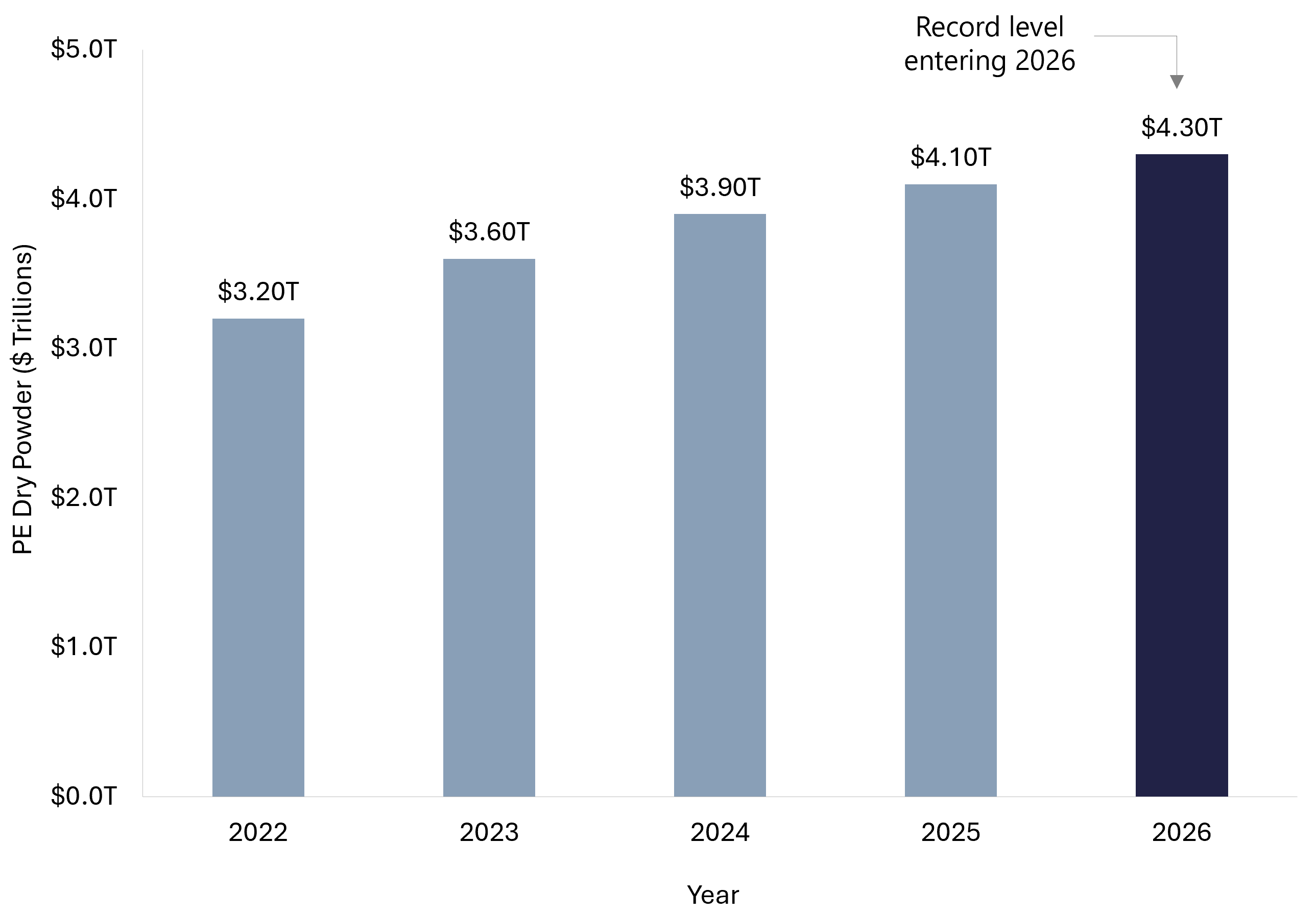
The macro backdrop makes this network even more valuable. Financial sponsors entered 2026 with a record $4.3 trillion in dry powder, and 57% of corporate dealmakers expect to execute more deals in 2026 than in 2025, with 82% planning one to four transactions during the year. Strategic acquirers, hungry for AI capability, vertical depth, and platform consolidation, are competing harder than they have in years. FE International’s network is positioned to capture that demand across every vertical the firm covers.
PE involvement in tech transactions has hit new highs. PE funds drove roughly two of every three deals in Q3 2025, and SaaS deal activity in particular saw PE participation reach 58% of all transactions in 2025. For founders running a structured sale process with an advisor who can run a competitive bid across PE firms, family offices, and strategic acquirers, this is the most favorable buyer environment in years.
Self-serve marketplaces operate on a different model. Anyone can register as a buyer in many cases, and there is no pre-qualification for standard listings. For businesses valued under $50,000, the open-access model works fine. For tech businesses worth $500,000 or more, with employees, vendor relationships, and a competitive position to protect, the risk profile is different.
The FE International marketplace addresses this by curating both sides. Sellers get faster access to active buyers. Buyers get verified financials and operational summaries on every listing. The platform is built for speed without sacrificing quality control.
What an Integrated Advisor Handles That a Marketplace Does Not
The most useful way to compare an advisory engagement and a self-serve marketplace listing is to look at the actual work involved in selling a tech business, and who does it.
A typical tech business sale includes the following workstreams: valuation, preparation of a Confidential Information Memorandum (CIM), buyer identification and outreach, NDA management, indications of interest, letter of intent negotiation, buyer-side due diligence response, definitive agreement drafting, legal review, escrow coordination, asset transfer, and post-close transition support. Each of these is a real piece of work, and each one can affect the final outcome.
With FE International’s advisory engagement, all of these workstreams sit inside one engagement managed by a dedicated senior advisor. The valuation is conducted by that advisor. The CIM is prepared by FE’s team. Buyer outreach runs across FE’s vetted investor network. Negotiation is led by the advisor. In-house legal drafts the LOI and definitive documents. Due diligence support is included. Escrow and transition are coordinated by FE. The seller has one team, one point of accountability, and one process from start to close.
With a self-serve marketplace approach, those same workstreams still exist; they just sit with the seller. The seller writes the listing description, sets the asking price, manages buyer communication, negotiates terms, and arranges separate professional support for legal documentation, due diligence response, and closing. Founders who want professional support typically engage external attorneys, accountants, or specialized M&A consultants for those pieces. The work does not disappear; it is just distributed across the seller and a set of vendors the seller has to coordinate.
This is where the academic evidence becomes practically useful. Independent analysis of thousands of private company transactions found that sellers represented by M&A advisers receive meaningfully better deal valuations. Better positioning, broader buyer outreach, and stronger negotiating leverage show up in the final sale price. That is why the overwhelming majority of institutional sellers use advisors when the transaction is meaningful.
For tech businesses under $1M, the workstream load looks different. The deal is typically less complex, the buyer pool is different, and the FE International marketplace is designed to match that profile: curated buyers, verified listings, and human support when the seller wants it. Founders get speed and access to a vetted buyer pool without committing to a full advisory mandate.
Confidentiality, Process Discipline, and Deal Execution
A second factor that separates a managed advisory process from an open marketplace is how the sale is conducted. Process discipline is invisible until it matters, and then it matters a lot.
When FE International is engaged, the sales process is confidential by default. The senior advisor builds a Confidential Information Memorandum (CIM) presenting the business to qualified buyers under NDA. Employees, customers, competitors, and the broader market do not learn the business is for sale unless and until the seller chooses. Confidentiality protects operating stability during the sale process. It also preserves the seller’s negotiating leverage; a public listing telegraphs urgency and weakens the seller’s position.
The FE process moves through structured stages: pre-marketing diligence, valuation, CIM and marketing materials, buyer outreach, indications of interest (IOIs), letters of intent (LOIs), buyer-side due diligence, definitive agreement drafting, and close. Each stage has clear deliverables and a defined owner. Buyers see a serious process and respond accordingly, often with competitive offers that lift the final price.
Self-serve marketplaces operate publicly by default. Listing titles, financial summaries, and business categories are visible to anyone browsing. Some marketplaces offer paid confidentiality features, but the standard model is open. For early-stage sellers, that visibility can drive useful interest. For founders with employees, key customers, and a market position to protect, an open listing carries real risk if word gets back to staff or competitors.
In-house legal is another dimension where an integrated advisor structurally differs from a marketplace. FE International’s legal team drafts the LOI, the purchase agreement, and ancillary documents, and manages the legal side of due diligence. On a marketplace transaction, the seller engages their own attorney for every document and every negotiation cycle. The work moves from one integrated team to a set of vendors the seller has to coordinate.
Process discipline shows up most clearly when a deal hits a friction point, which most deals do. Earnouts, working capital adjustments, retrade attempts during diligence, key-person dependencies, customer concentration, and structural deal terms all require experienced negotiation. A founder going through this for the first time, alone, often loses leverage at exactly the moments that matter most. An advisor who has closed 1,500 transactions has seen every variation.
How Founders Maximize Sale Value in 2026
The 2026 buyer environment rewards preparation. Founders who walk into a sale process with clean financials, vertical-relevant positioning, and a competitive set of bidders consistently outperform founders who skip those steps. Most of what drives a premium outcome is decided before the business goes to market.
Three preparation areas matter most across every vertical. First, financial cleanliness. Buyers underwrite based on what they can verify. GAAP-compliant financials, a clean adjusted EBITDA bridge, vertical-specific KPI packages (ARR/MRR for SaaS, GMV and repeat rate for ecommerce, EBITDA margin and retention for agencies, ARR and security spend exposure for cybersecurity), and consistent reporting reduce diligence friction and limit retrade risk. Second, vertical positioning. The same business positioned well to one buyer type can earn a dramatically different multiple than the same business positioned generically. AI-native capability, recurring revenue mix, customer concentration, and management depth all affect how buyers price the asset.
Third, competitive process. The single largest lever in a sale outcome is whether the seller runs a structured process that puts multiple qualified buyers in competition. A bilateral negotiation with one buyer almost always leaves value on the table. Independent academic analysis found that sellers represented by M&A advisers receive meaningfully better deal valuations, and the mechanism is straightforward: an advisor with a network of 80,000+ vetted investors can run a parallel process across PE firms, family offices, and strategic acquirers that a solo founder cannot replicate.
The 2026 environment amplifies the value of running this process well. With record PE dry powder ready to deploy, strategic acquirers competing for AI capability and vertical platform depth, and 57% of corporate dealmakers expecting to execute more deals than in 2025, the buyer pool is unusually deep. A well-prepared business that runs a structured process captures the premium that depth creates.
For tech businesses in the $1M-$100M+ range, the FE International advisory team handles the entire preparation and process, end to end. The senior advisor identifies what needs to be cleaned up before going to market, prepares the CIM, runs the buyer outreach, and manages the competitive process through to close. For tech businesses under $1M, listing on the FE International marketplace gives founders access to the same curated buyer pool, with verified listings that signal quality to active acquirers.
Matching the Right FE Channel to Your Tech Business Size
One of the most useful frames for tech founders comparing platforms is this: where does your business sit on the spectrum, and which channel is built for that segment?
FE International's advisory service is built for tech businesses generating $1M+ in revenue or earnings, with a typical sweet spot in the $1M to $100M+ range. Above $10M, transactions typically involve investment banking services: competitive auction processes, management presentations, detailed financial modeling, and multi-party negotiations involving larger PE platforms, holding companies, and strategic acquirers. FE’s investment banking division handles these complex deals end-to-end.
The FE International marketplace is built for tech businesses under $1M. Founders who do not want to commit to a full advisory mandate but still want curated buyers and human support when needed list directly on the platform. The marketplace covers SaaS, ecommerce, fintech, cybersecurity, edtech, AI, and agency businesses. Verified financials and operational summaries are standard on every listing.
Self-serve marketplaces in the tech M&A space typically focus on smaller transactions, often under $1M-$2M. They do well at facilitating volume at lower price points, where the open-marketplace model is well suited to first-time founders and lighter-touch buyers. They are not built to manage the complexity of a multi-million-dollar tech deal involving institutional buyers, structured deal terms, due diligence at PE depth, and the level of legal documentation a $5M+ transaction requires.
Choosing the right channel is not about which platform is "better" in the abstract; it is about which is built for the deal in front of you.
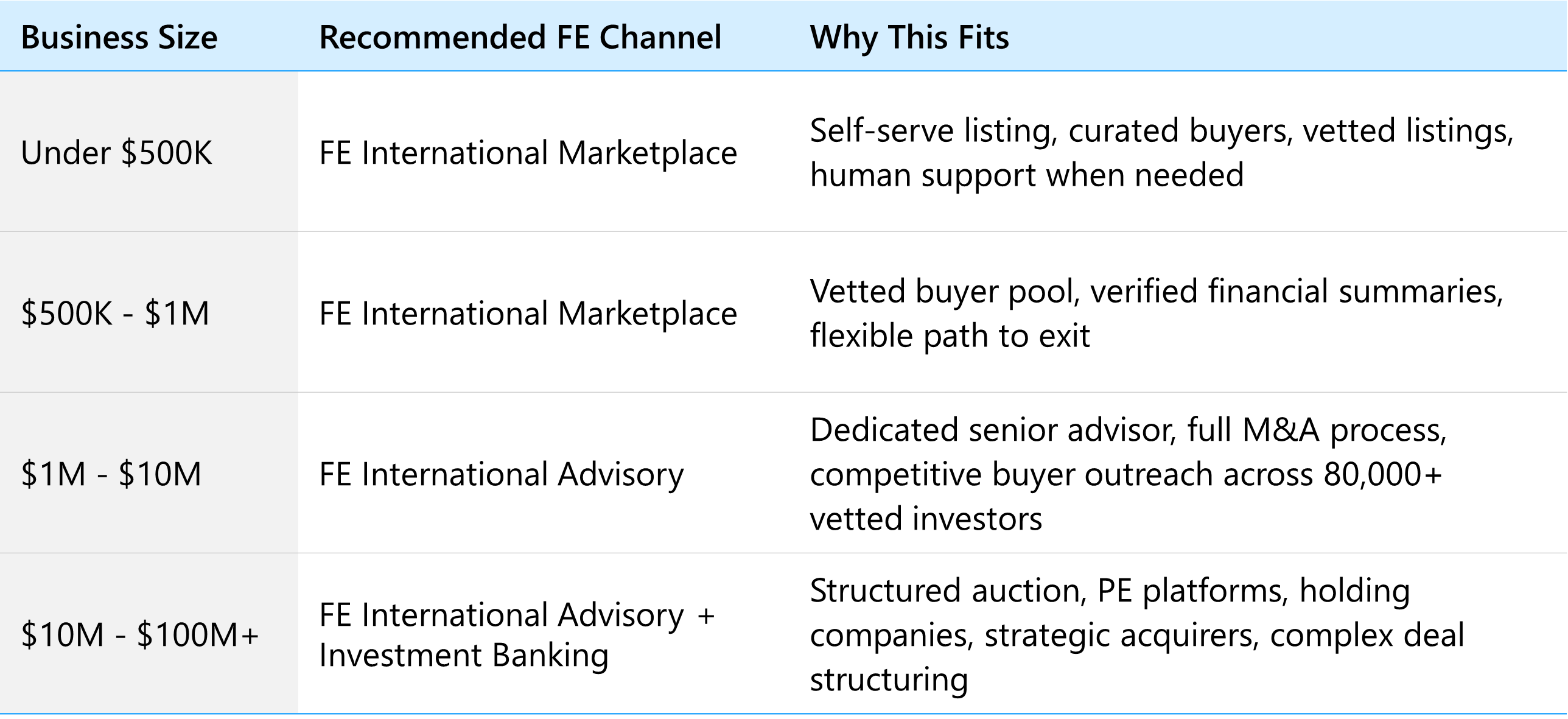
For founders unsure which channel fits best, FE International conducts a free, no-obligation valuation that covers both options.
Why the 2026 M&A Window Matters Right Now
The 2026 environment is unusually favorable for well-prepared tech sellers, and that backdrop directly affects how to think about platform choice.
The 2026 M&A market is rated at a six-year high, with 58% of respondents (and 69% of PE firms) describing it as somewhat or extremely strong. More than 80% of corporate and PE dealmakers expect to transact a greater volume of deals with greater aggregate value over the next 12 months. The optimism is supported by strong fundamentals: dealmaking as a response to change, the search for new sources of growth, and continued portfolio streamlining.
The capital backdrop is exceptional. PE firms are sitting on record dry powder of approximately $4.3 trillion, with private equity activity expected to drive a significant share of 2026 dealmaking. Global M&A rebounded sharply in 2025 and the market is set up for continued strength as conditions stabilize. Technology M&A is leading the field. Tech deal value reached approximately $1.08 trillion in 2025, a level the sector had not seen in years.
Vertical demand is concentrated. AI, cybersecurity, and vertical SaaS lead the buyer interest charts. Cybersecurity alone reached $92.5 billion in disclosed deal value across 426 transactions in 2025, with eight deals topping $1 billion. Information security spending is projected to reach $240 billion in 2026, providing structural support for premium valuations in the space. AI-native companies, AI-enhanced SaaS, and vertical software platforms with strong NRR are commanding premium multiples.
The implication for tech founders is straightforward. Buyer demand is strong, capital is available, and high-quality assets are commanding premium multiples. The path to capturing that premium runs through process: clean financials, clear positioning, vertical-relevant valuation, and a competitive buyer process. That is the work an integrated advisor does. For sellers in the $1M-$100M+ range, the FE International advisory model is purpose-built for this environment. For sellers under $1M, the FE marketplace is the streamlined route to the same favorable buyer pool.
The window is open. The question is which channel is built for the business and the moment.
Choosing the Right Path for Your Tech Business Exit
The right platform depends on the size of the business, the complexity of the deal, and what the founder expects from the process.
For tech businesses worth $1M to $100M+, the FE International advisory practice is built to deliver premium outcomes. With 1,500+ transactions, $50 billion+ in deal value, a 94.1% success rate, 80,000+ pre-vetted investors, and dedicated vertical teams across SaaS, AI, cybersecurity, edtech, fintech, ecommerce, agency, and marketplace apps, the firm is positioned to run the kind of competitive, well-managed process that consistently delivers strong results. The 2026 buyer environment, with record PE dry powder, surging strategic acquirer demand, and quality assets commanding premium multiples, is one of the most favorable in years for sellers who run the right process.
For tech businesses under $1M, the FE International marketplace gives founders a curated, efficient path to exit. Verified listings, vetted buyers, real demand, and human support when needed: the marketplace is designed to deliver speed without sacrificing quality control.
If you are evaluating an exit, the next step is a free, confidential valuation from FE International. The valuation draws on FE’s proprietary database of 1,500+ completed transactions and surfaces the specific factors that will drive your final sale price. If your business is in the $1M-$100M+ range, the advisory team will guide you on the right next steps. If your business is under $1M, the team will point you to the FE International marketplace, where you can list and start connecting with curated buyers. The 2026 M&A window is open. Choosing the right channel is how founders capture the premium it offers.