
Due Diligence and Collaboration

This page explains how buyers manage due diligence after an offer has been accepted, including requesting information, reviewing documents, and collaborating with founders inside the platform.
When Due Diligence Begins
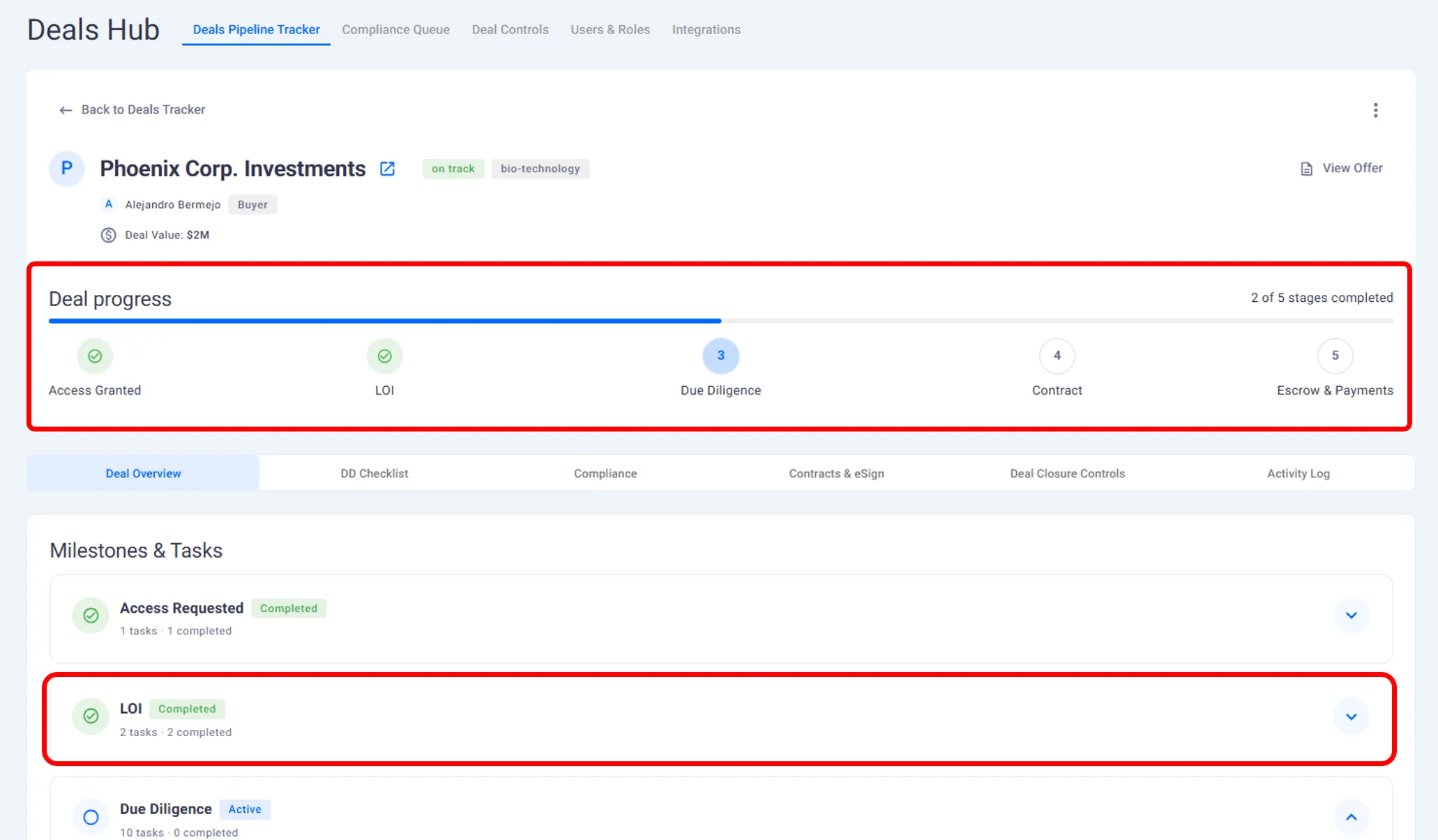
Due diligence begins once a founder accepts your offer and the deal moves forward.
At this stage:
The conversation shifts from negotiation to verification.
You request detailed information to validate the business.
All activity is managed within the Deal Hub.
Due Diligence Tasks
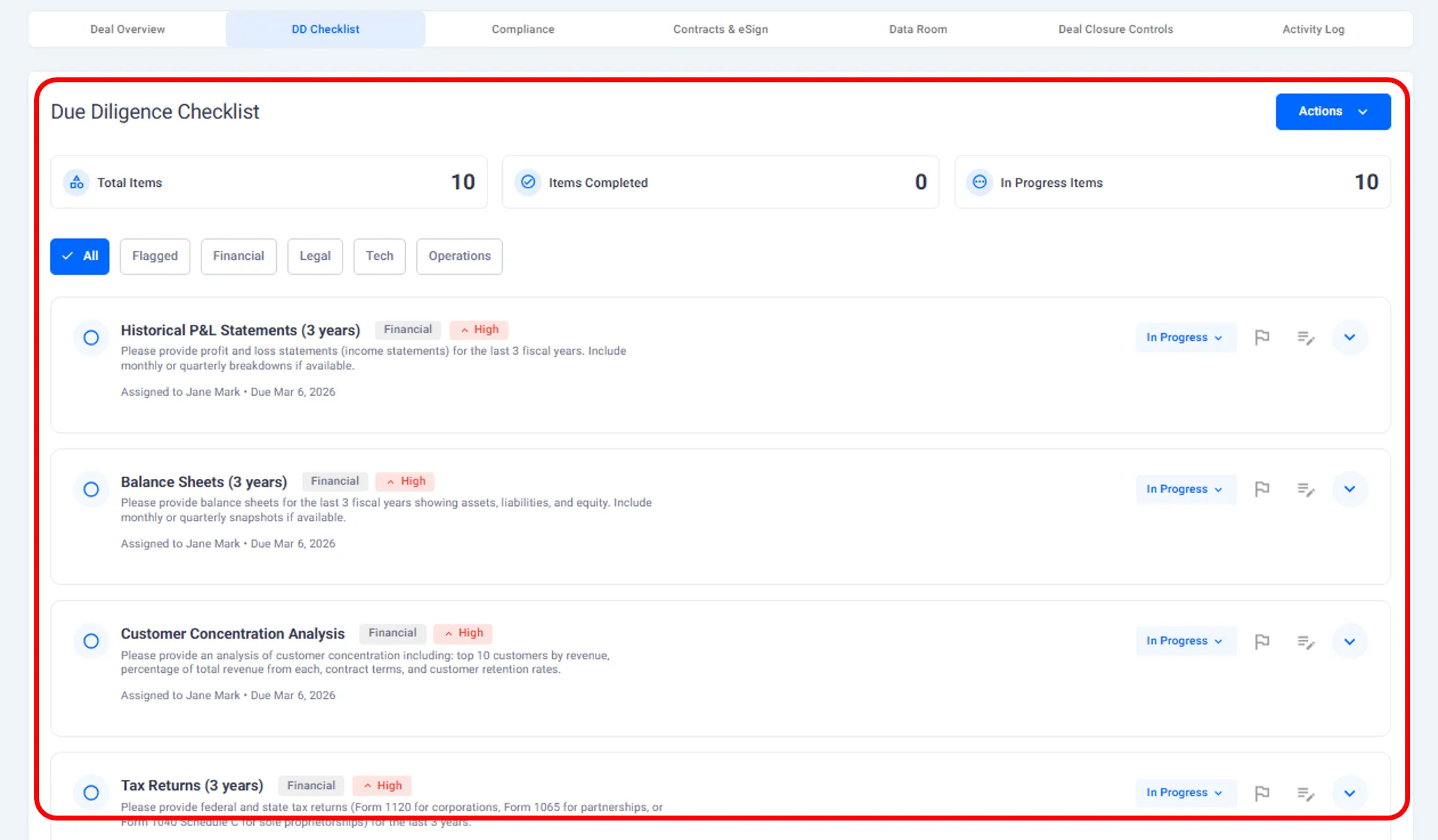
Each deal includes a set of due diligence tasks.
By default:
A standard task list is created when the deal enters due diligence.
Tasks cover common areas such as financials, legal items, and operations.
This default list provides a starting point for the process.
Customizing Due Diligence Requirements
Buyers are not restricted to the default task list.
You can:
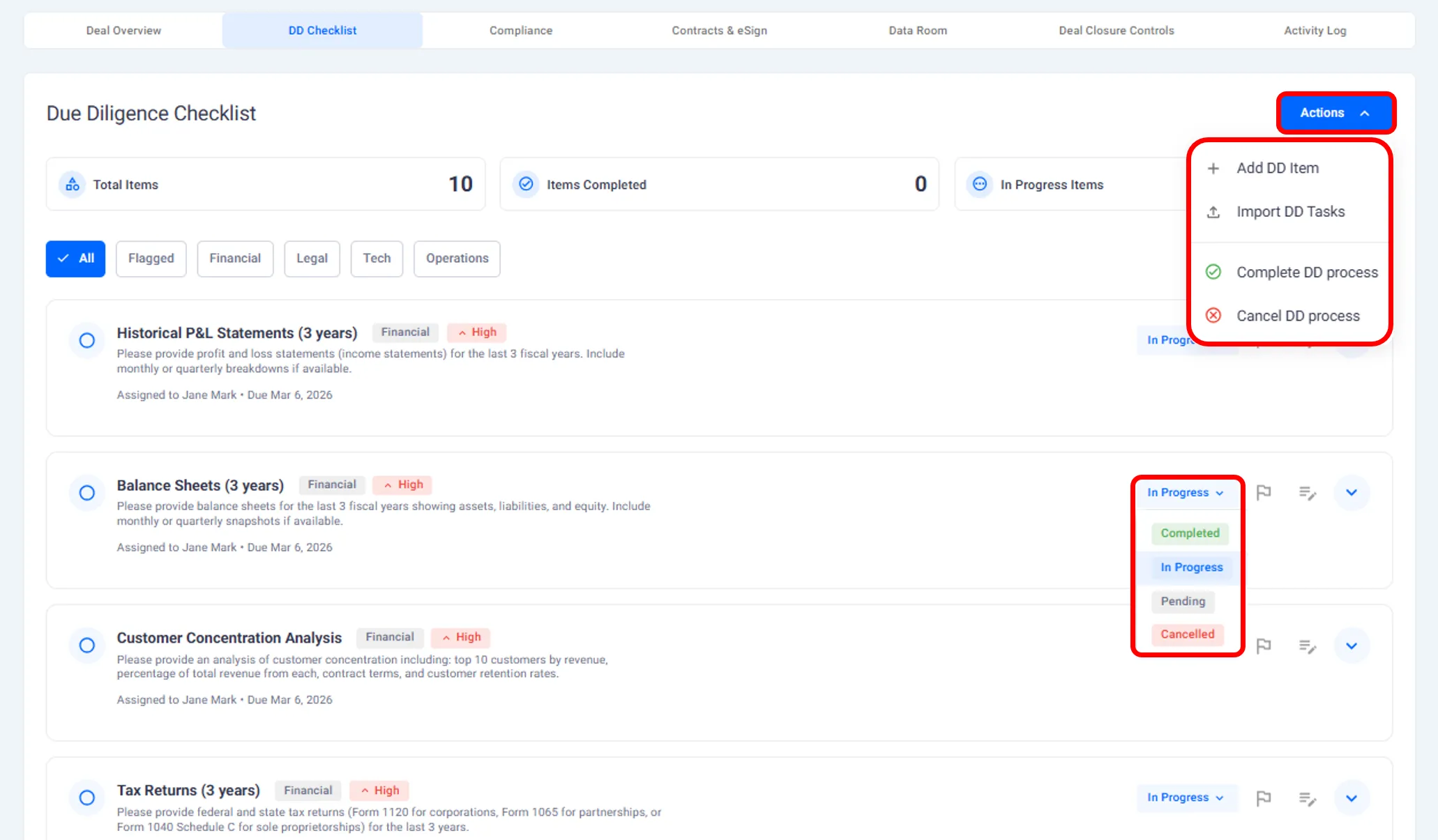
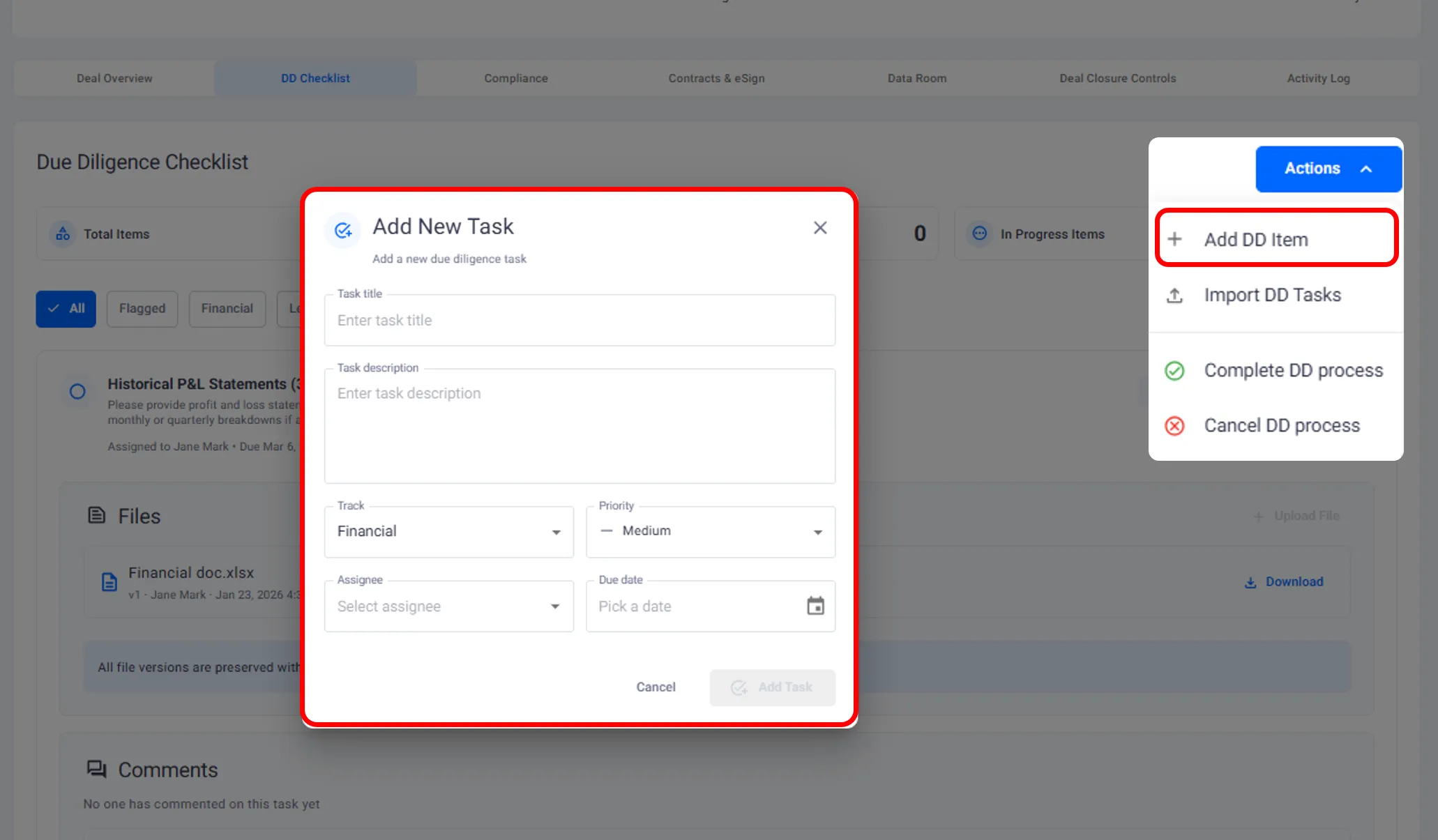
Add new tasks manually.
Edit or remove existing tasks.
Upload your own due diligence checklist to replace the default list.
This allows you to follow your internal review process while keeping everything centralized.
Requesting Documents and Information
For each task, you can request specific documents or information from the founder.
You can:
Add task descriptions to clarify what is needed.
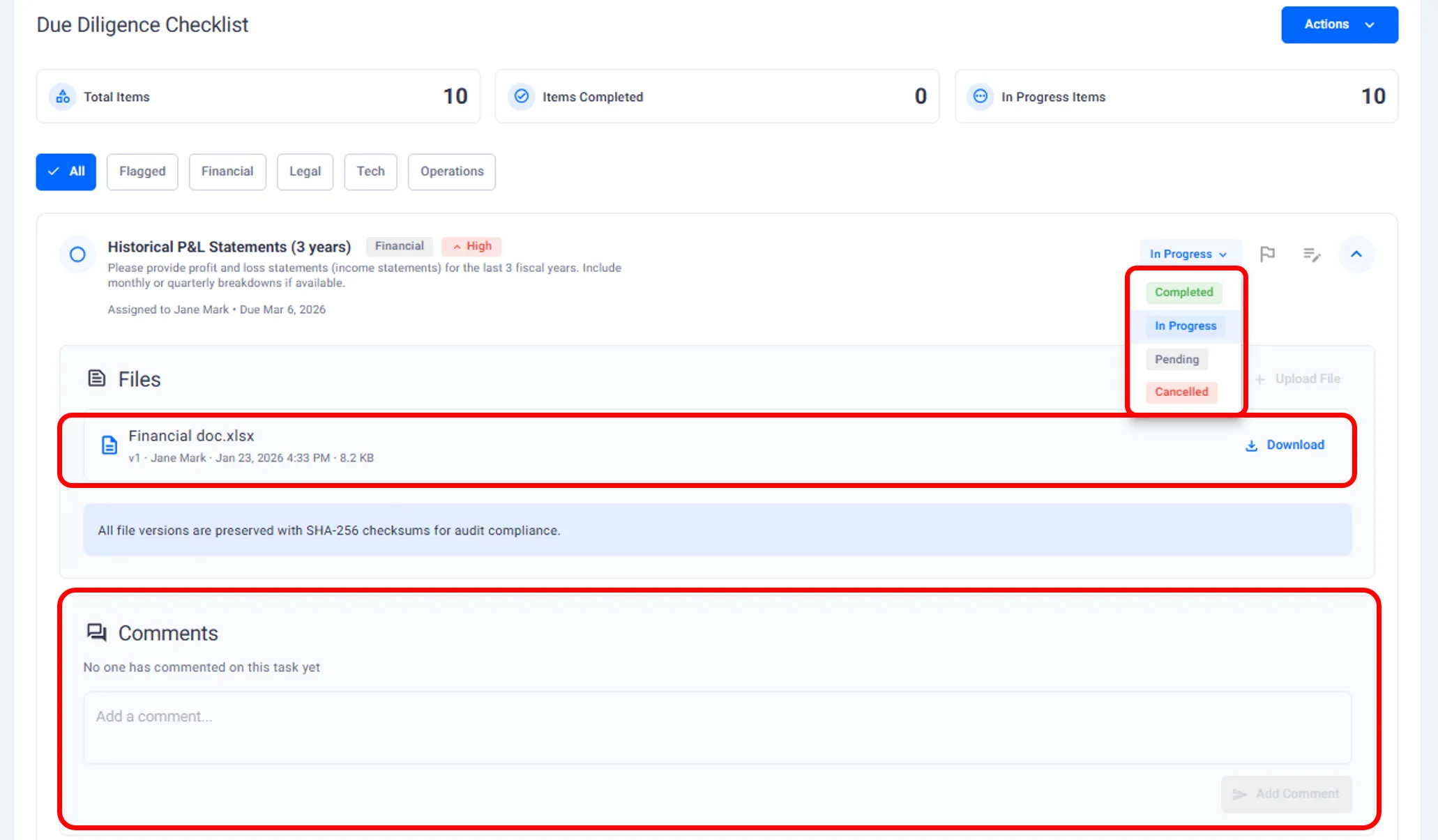
Leave comments to provide context or ask follow up questions.
Update task status as information is reviewed.
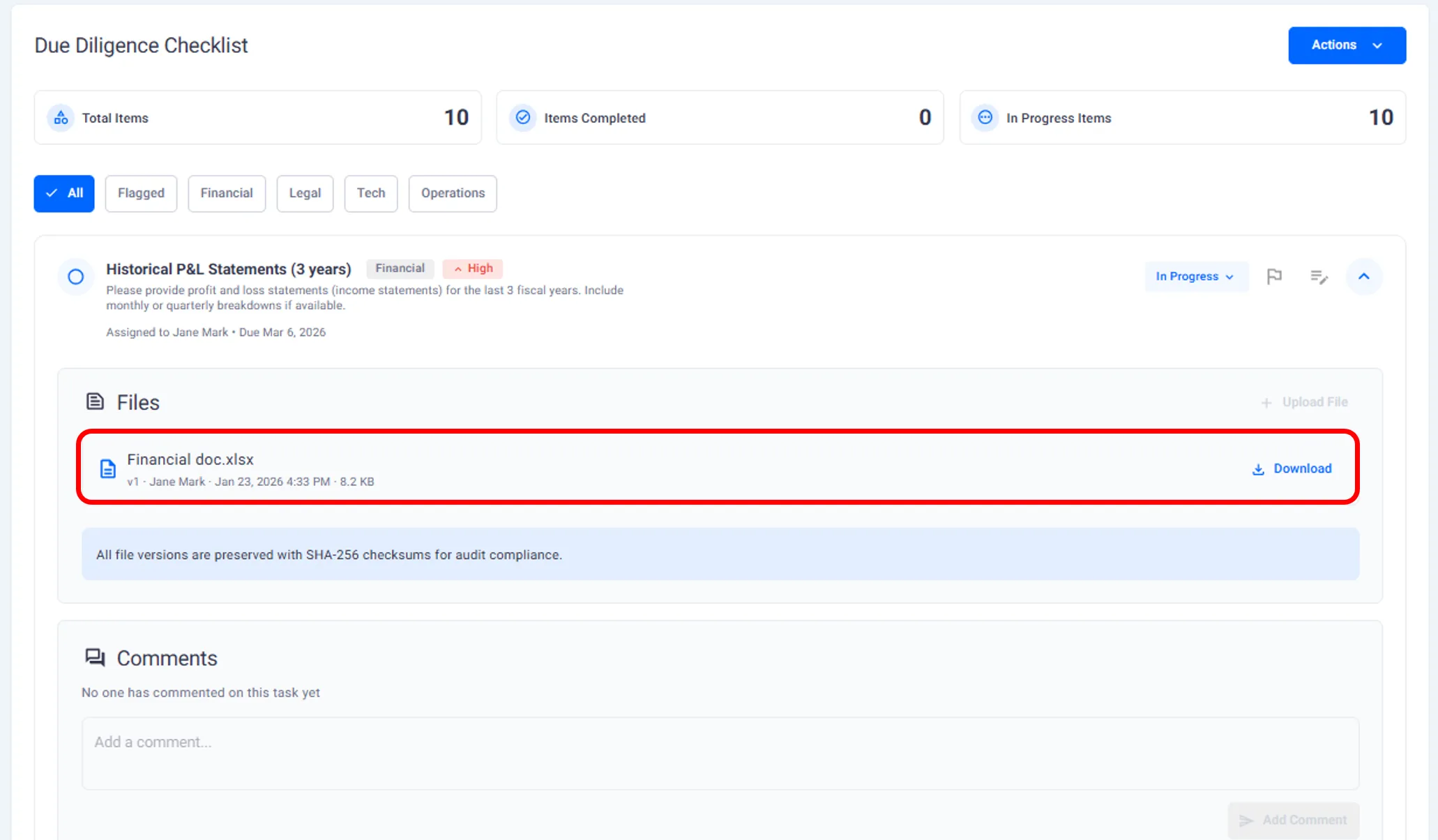
Founders respond by uploading documents directly to the task.
Reviewing Submitted Documents
Once documents are uploaded:
You can preview files.
Download documents for offline review.
Leave comments or request clarification.
Mark tasks as in progress or completed.
All documents remain tied to the specific deal and task they relate to.
Organizing Due Diligence Materials
The platform organizes documents to make review easier.
You can:
View files by task.
Access a consolidated folder view for the deal.
Download documents individually or in groups.
This helps reduce back and forth and keeps materials easy to find.
Tracking Due Diligence Progress
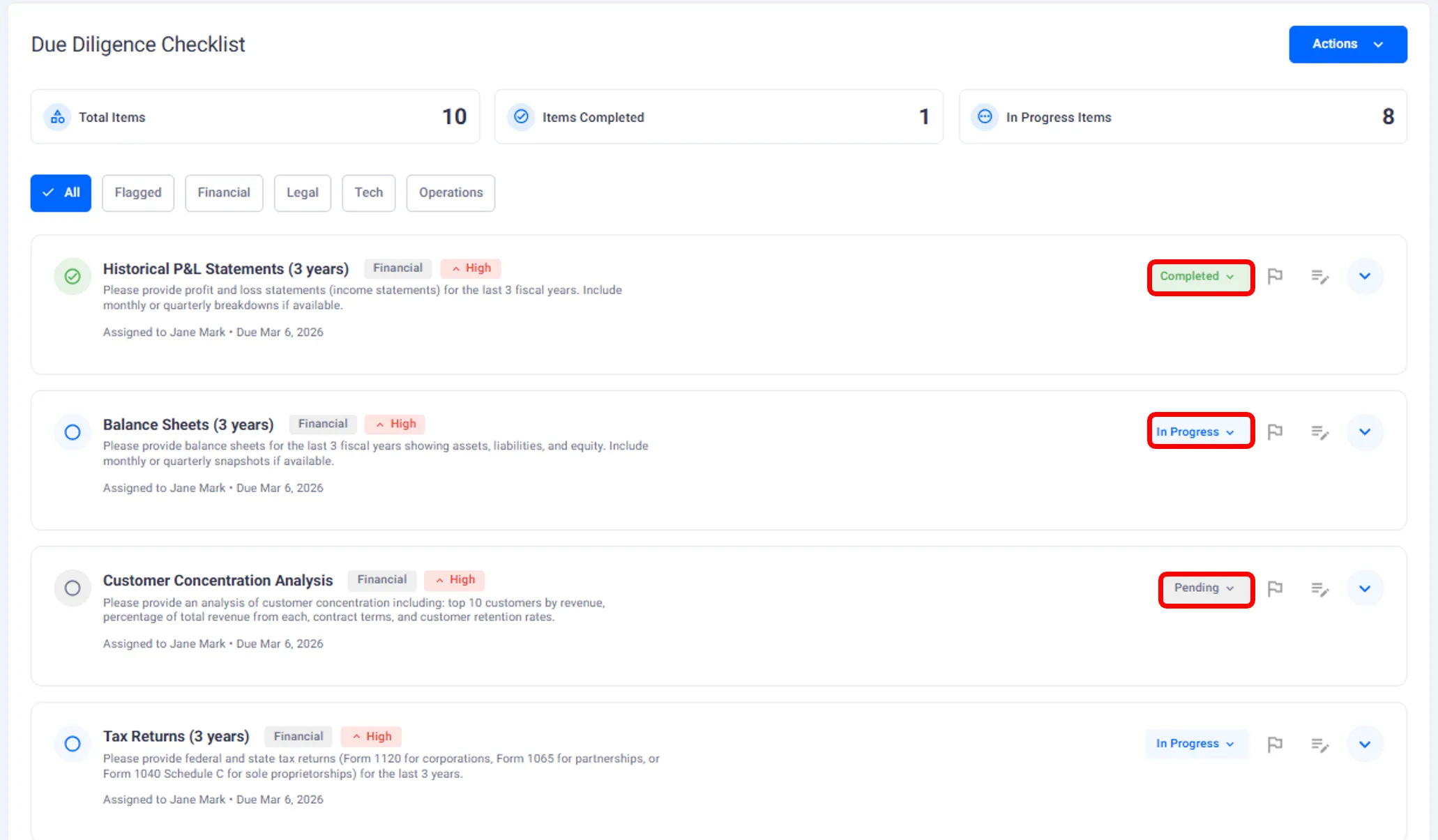
Throughout due diligence, you can track:
Which tasks are complete.
Which tasks are still open.
Where follow ups are required.
This visibility helps you manage timelines and keep the process moving.
What This Page Covers and What Comes Next
This page explains:
How buyers manage due diligence.
How documents and tasks are handled.
How collaboration works during review.
The next page explains how deals progress after due diligence and what buyers can expect next.
Need help?
Contact our support team and get the help you need.

.webp)