


Introduction
How much is your AI business really worth in 2026? For founders and executives, this question is more critical and complex than ever before. In a year marked by record-breaking AI deal volumes, surging valuations, and unprecedented funding activity, understanding the true value of your AI company is no longer a simple exercise in applying old-school tech multiples. According to S&P Global, OpenAI’s valuation soared to $500 billion in 2025, while Anthropic reached $183 billion, both driven by proprietary technology, data assets, and aggressive global expansion. Mega-rounds and exits are now setting new records across every major region, with Reuters reporting a $2.6 trillion global M&A peak in 2025 a 28% year-on-year jump, largely powered by AI sector consolidation.
Yet, these headline numbers only scratch the surface. The value drivers for AI businesses are evolving at lightning speed. Proprietary ML models, curated datasets, data privacy controls, and innovative monetization models are now as important as revenue and growth rates. Founders must navigate a landscape shaped by rapid technological shifts, regulatory uncertainty, and fierce competition for global market share. Traditional valuation frameworks while still relevant are being supplemented with AI-specific methodologies that better capture the unique value proposition of data-rich, IP-driven companies.
This comprehensive guide will demystify the AI business valuation model for 2026, providing you with actionable frameworks, verified benchmarks, and step-by-step checklists tailored for today’s global AI market. We’ll break down the methods and metrics that matter, analyze real-world deal data, and highlight the pitfalls and best practices that separate valuation leaders from laggards. Whether you’re preparing to fundraise, exit, or simply want to understand your company’s worth, you’ll find clear, data-backed answers plus strategic insights to help you maximize your multiple in a fast-evolving landscape.
If you need an expert-led, confidential appraisal of your AI or SaaS business, book a free valuation call with FE International at any time.
What is an AI Business Valuation Model and Why Does it Matter in 2026?
An AI business valuation model is a structured framework used to estimate the economic value of a company whose core value derives from artificial intelligence technology, proprietary algorithms, large-scale data assets, and related intellectual property. Unlike traditional software or SaaS businesses, AI companies often possess unique, non-tangible assets such as machine learning models, curated datasets, and proprietary training infrastructure that are difficult to value using legacy methods alone.
Why AI Companies Are Different
AI companies in 2026 stand apart for several reasons:
- Proprietary Technology/IP: The core value often lies in unique algorithms, patents, or deep learning architectures that cannot be easily replicated.
- Data Assets: Access to large, clean, and proprietary datasets is essential for building and improving AI models, making data a strategic asset.
- Scalability and Network Effects: AI platforms can scale rapidly, benefiting from inherent network effects as more users generate more data, improving model accuracy and value.
- Monetization Models: AI businesses increasingly monetize via recurring ML model licensing, data-as-a-service, and AI-powered platforms, driving higher-quality, sustainable revenue streams.
Evolution from Traditional Tech to AI-Specific Frameworks
The classic valuation frameworks Discounted Cash Flow (DCF), Comparable Company Analysis (Comps), and Precedent Transactions are foundational, yet they often fail to fully capture the future potential and risk profiles unique to AI firms. In response, 2025-2026 has seen the emergence of AI-specific models that emphasize the value of proprietary technology, recurring data monetization, and the scalability of ML-based products.
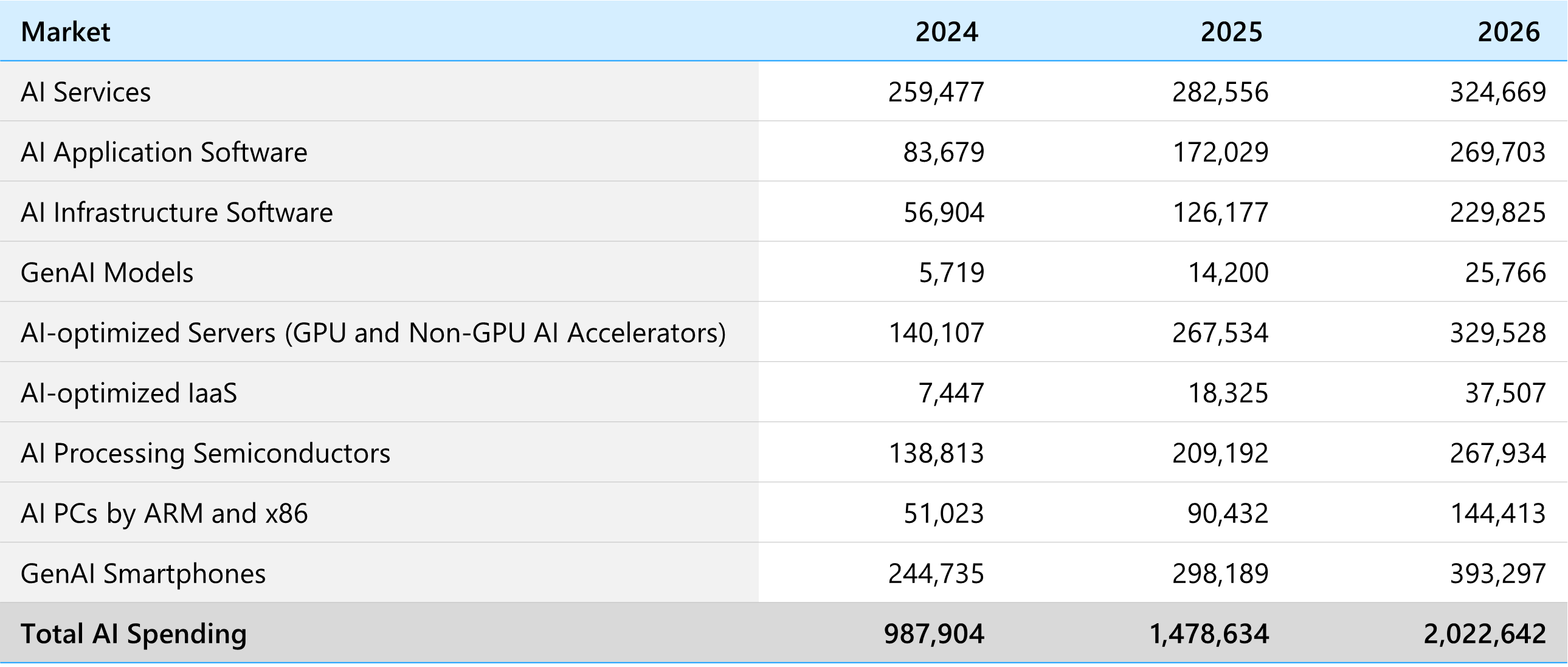
Market Data Snapshot:
- The global AI sector reached new heights in 2025, with over $1.5 trillion in projected AI spending and historic valuations for leaders like OpenAI ($500B) and Anthropic ($183B).
- Tech megacaps (Amazon, Meta, Google, Microsoft) hit new valuation peaks in 2025, driven by AI expansion.
- AI startups with as few as 10 employees (e.g., SSI) closed $1B rounds at $5B valuations, illustrating the premium on proprietary tech and brand.
As AI business models evolve, founders need to apply frameworks that align with the realities of the 2026 market. For those with SaaS roots, FE International’s SaaS valuation guide remains a valuable starting point, but expect to supplement it with AI-specific analyses.
“An AI business valuation model in 2026 must capture the value of proprietary algorithms, unique datasets, recurring revenue, and scalability factors that increasingly define market leaders and drive premium multiples.”
Key Valuation Methods for AI Companies
AI company valuation requires a blend of established financial models and cutting-edge, IP- and data-centric frameworks. Let’s break down the five most relevant methods for 2026, with their strengths, weaknesses, and founder-relevant applications.
Discounted Cash Flow (DCF) for AI Businesses
The Discounted Cash Flow (DCF) method estimates value based on the present value of future cash flows. For mature, cash-generating AI companies, DCF remains an anchor framework. However, the challenge lies in forecasting cash flows in volatile, fast-evolving AI markets.
- How it works: Project future free cash flows over 5–10 years, then discount them to present value using a required rate of return (reflecting risk).
- AI-specific considerations: Volatility in AI market adoption, high R&D burn, and rapid revenue growth can make projections uncertain. Scenario analysis is essential, often modeling several growth and risk cases.
Example Calculation:
Suppose an AI SaaS platform generates $60M in ARR (annual recurring revenue), growing 40% YoY, with 15% EBITDA margins and a 10% discount rate. DCF projections must account for competitive threats, regulatory shifts, and potential “winner-take-all” effects often requiring probability-weighted scenarios.
- Strengths: Captures intrinsic, long-term value; adjusts for risk.
- Weaknesses: Highly sensitive to assumptions; less reliable for very early-stage or high-burn AI startups.
Comparable Company Analysis (Comps)
Comparable Company Analysis (Comps) benchmarks valuation multiples (typically EV/Revenue or EV/EBITDA) against similar public and private companies.
- Role in AI: With public AI leaders (Databricks, Nvidia, Google, etc.) and high-profile private comps (OpenAI, Anthropic), comps provide real-world reference points for valuation.
- Unique AI comps: Split by business model (platform vs. product), customer base (B2B vs. B2C), and geographic region. In 2025, the average public AI company traded at 25–35x revenue; top private deals ranged from 15–30x.

Precedent Transactions Method
The Precedent Transactions method values a company based on multiples paid in recent M&A deals or funding rounds involving similar businesses.
- How it works: Analyze deal terms, valuation multiples, and drivers from comparable transactions (e.g., Anthropic’s $183B raise at $5B revenue run-rate = 36.6x revenue, 2025).
Founder Insight:
Precedent deals are particularly useful for setting valuation expectations in fundraising or sale negotiations, as they reflect market appetite for AI-specific assets (IP, teams, data).
Asset-Based & IP-Weighted Valuation
For early-stage or IP-heavy AI companies, Asset-Based and IP-Weighted methods may be more appropriate.
- Asset-based: Sums the fair market value of tangible and intangible assets, including proprietary datasets, code repositories, and patents.
- IP-weighted: Assigns explicit value to algorithms, model architectures, and patents, using recent deal benchmarks and/or royalty estimation models.
2026 Trends:
- IP and data-rich AI startups especially those pre-revenue or with nascent monetization command premiums if their assets have clear commercial pathways.
- Valuations often blend IP-weighted and comparable approaches to triangulate value.
Emerging Models (AI-Specific Frameworks)
The last two years have seen the rise of AI-specific valuation frameworks:
- Model Licensing Revenue: For companies with recurring machine learning model licensing (e.g., API-based products), valuation models emphasize the stability and growth of this topline.
- Data Monetization Models: AI businesses with proprietary datasets increasingly monetize via data-as-a-service, with value tied to data exclusivity, volume, and quality.
- Ecosystem Leverage: Companies with deep integrations into cloud/hyperscaler platforms or strong partnership networks can see material valuation uplifts.
Industry Research:
- In 2026, M&A valuations increasingly favor assets that demonstrate "scale, scarcity, and integration readiness," with a specific focus on unlocking defensible intellectual property.
“AI company valuation in 2026 blends classic methods with new frameworks that capture the value of proprietary models, data assets, and recurring AI-driven revenue streams.”
Unique Metrics for AI Company Valuation
While standard financial metrics remain relevant, AI company valuation in 2026 is increasingly shaped by unique, sector-specific drivers. Understanding and quantifying these factors is critical for maximizing valuation.
Proprietary Technology/IP Impact
Proprietary technology, algorithms, and patents are the backbone of most high-value AI businesses. The defensibility, uniqueness, and commercial potential of your tech/IP stack are often the single largest factors in achieving premium multiples.
- Case Example: In 2025, Databricks’ $134B valuation at a 27.9x ARR multiple was largely attributed to its proprietary AI/ML platform and patented data processing technology .
- IP Premium: Deals where buyers secured exclusive access to valuable ML models or unique architectures routinely saw 15–20% higher multiples vs. peers.
Founder Action Point:
Document your patents, codebase uniqueness, and defensibility. Independent IP audits can materially improve buyer/investor confidence.
Revenue Growth & Scalability
High revenue growth and scalability are essential for commanding top-tier valuation multiples.
- Benchmarks: In 2025, high-performance AI and SaaS companies are benchmarked by the top-quartile growth rate of 65.4%, significantly outpacing the median of 28.3%. According to the KeyBanc & Sapphire Ventures 2025 Survey, exceeding these growth thresholds is the primary indicator of a "premium" market valuation. Leaders like Anthropic grew revenue run-rate from $1B to $5B in just eight months (Reuters).
- ARR and Churn: Investors favor businesses with high annual recurring revenue (ARR) and low customer churn, signaling sustainable, predictable cash flows.
Founder Action Point:
Highlight recurring revenue streams, document customer lifetime value (LTV), and provide cohort analysis to illustrate stickiness and upsell potential.
Customer Data & AI Training Assets
Data is the “fuel” of modern AI businesses. Proprietary, large-scale, and clean datasets are major value drivers, especially for model training and fine-tuning.
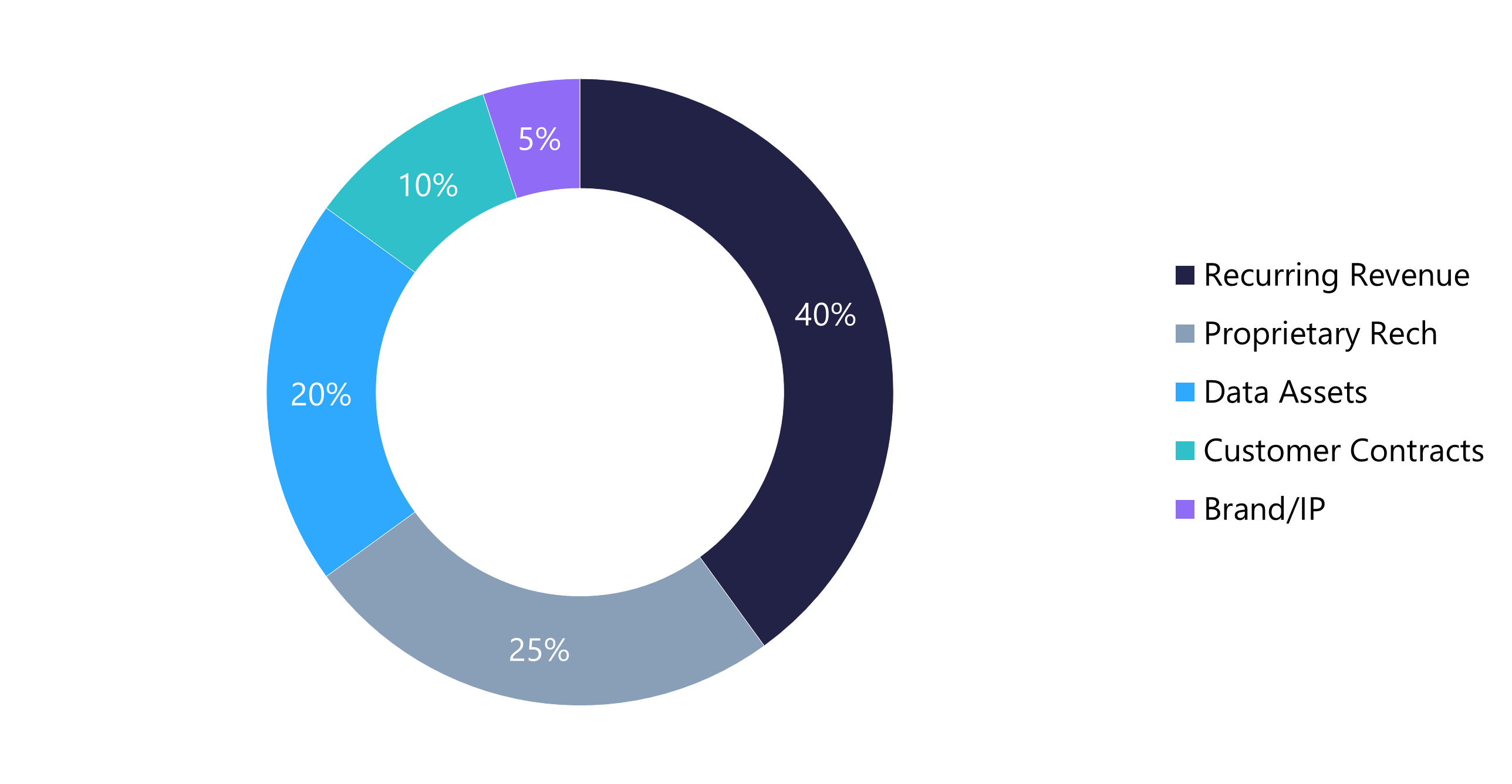
Privacy/Ownership:
Data privacy and regulatory compliance are now critical. Buyers scrutinize data provenance and rights. Uncertainty or risk in this area can cause substantial valuation discounts.
Team, Brand & Ecosystem Effects
The premium on technical talent, brand, and integration into key ecosystems is another hallmark of 2026 AI valuations.
- Example: SSI, a 10-person AI startup, achieved a $5B valuation due to the strength of its founding team and brand in the AI research community.
- Ecosystem Uplift: Partnerships with cloud providers, hyperscalers, or influential enterprise customers often translate to material valuation uplifts.
Founder Action Point:
Highlight your team’s credentials, industry awards, and partnership ecosystem in all valuation discussions and marketing materials.
“Recurring revenue, proprietary technology, unique datasets, and technical talent are the most significant drivers of AI business valuation in 2026. Founders should quantify and proactively showcase these assets.”
2026 Valuation Trends in the AI Sector
The AI sector’s valuation landscape is more dynamic than ever, shaped by massive capital inflows, global M&A, and shifting investor sentiment. Understanding these trends is essential for benchmarking your own business and timing key strategic moves.
The 2024–2026 Surge: Funding, Consolidation, and M&A
- Global M&A Activity: 2025 saw a record $2.6 trillion in global M&A value, a 28% YoY increase, driven largely by AI megadeals.
- Deal Size: The average deal size hit $141.4 million in Q3 2025, with US, EU, and Asia all reporting double-digit growth in AI sector deal flow.
- Sector Multiples: In 2025, premier public AI infrastructure companies commanded a 23.4x to 35x revenue multiple, while top-tier private deals consistently reached 30x to 50x. High-profile leaders like Databricks set the pace with a $134B valuation at a 27.9x ARR multiple, driven by proprietary AI/ML platforms and patented data processing technology.
Geographic and Sector Variations
- US: Continues to dominate in deal volume and valuation multiples, with the highest concentration of mega-rounds and exits.
- APAC: Hong Kong led the region with $75B in tech/AI ECM deals in 2025, and APAC multiples are rising rapidly.
- EU: Saw double-digit AI sector deal growth, though multiples lag slightly behind the US and APAC.
Investor Sentiment and Funding Forecasts
- Investor Appetite: AI remains the most sought-after tech sector in 2026, with Gartner forecasting $1.5 trillion in global AI spend.
- Risk Factors: That said, 40%+ of agentic AI projects are expected to be canceled by 2027, raising investor focus on due diligence and risk-adjusted returns.
Founder Action Point:
If you’re considering a strategic exit or expansion, now is a favorable time to buy a SaaS business or seek new investment. Multiples and capital availability are at multi-year highs.
“In 2026, AI company valuations reflect a global surge in M&A, with premium multiples for data-rich, scalable firms, especially in the US and APAC, where investor demand remains strongest.”
AI Valuation Risk Factors in 2026
AI businesses face unique and sometimes severe risk factors that can materially affect their valuation. Understanding, quantifying, and proactively managing these risks is essential for defending and maximizing your company’s worth.

Key Risk Factors Defined
- Regulatory Risk: New and evolving laws on AI safety, explainability, and ethics can dramatically impact business models. In regions with active regulatory scrutiny (e.g., EU, US), AI businesses may face up to 30% valuation discounts if compliance is uncertain.
- Data Privacy and Ownership: Inadequate controls over user data, unclear data rights, or exposure to privacy lawsuits pose significant valuation risks, often resulting in 20% or higher discounts.
- Technical Obsolescence: The rapid pace of AI innovation means yesterday’s leading model may be obsolete tomorrow. Without ongoing R&D, companies risk a 15% or greater multiple reduction.
- Model Bias and Explainability: AI systems that are opaque or have documented bias may be penalized by regulators, customers, and acquirers.
- Execution Risk: Gartner estimates over 40% of advanced AI projects are canceled before completion due to unclear value or poor controls.
How to Manage and Defend Against Risks
- Regulatory Compliance: Proactively implement robust data governance, model explainability, and ethical AI frameworks to reassure buyers and investors.
- Data Controls: Maintain clear documentation of data sources, ownership rights, and privacy protections.
- Continuous Innovation: Invest in R&D and document your technology roadmap to demonstrate resilience and future-readiness.
Definitions
- Regulatory risk: The threat that new or changing AI regulations will reduce a company’s addressable market or increase compliance costs.
- Data privacy risk: The likelihood that inadequate protection of user data leads to financial, legal, or reputational harm.
- Technical obsolescence risk: The risk that a company’s core AI technology becomes outdated due to rapid innovation.
“Regulatory, privacy, and technical risks can reduce AI business valuation multiples by 15–30% in 2026—founders must address these proactively to defend enterprise value.”
How to Value an AI Business: Step-by-Step for Founders
Valuing an AI business in 2026 involves a rigorous, multi-stage process that integrates financial, technical, and operational due diligence.

Step 1: Gather Key Documents and Metrics
- Financials: 3–5 years of P&L, balance sheet, and cash flow statements
- Revenue Metrics: ARR, growth rates, customer churn, LTV
- IP Inventory: Patents, proprietary code, technical documentation
- Data Assets: Documentation of data sources, ownership, and privacy compliance
- Team and Org Chart: Resumes, key technical hires, and compensation
Step 2: Select Appropriate Valuation Methods
- Decide on a blend of DCF, comps, precedent transactions, and IP-weighted models based on your company’s maturity and asset profile.
Step 3: Conduct Technical and Data Due Diligence
- Assess the uniqueness and defensibility of your ML models, training data, and tech stack.
- Engage third-party experts if needed to validate code, IP, and data provenance.
Step 4: Adjust for Risk Factors
- Quantify and document how regulatory, privacy, and technical risks are being managed.
- Prepare scenario analyses for investors/buyers.
Step 5: Synthesize and Benchmark
- Triangulate your valuation using multiple methods and compare to recent deals in your sector and region.
Step 6: Prepare for Negotiation
- Highlight key value drivers and defensibility.
- Anticipate buyer/investor concerns and have data-driven answers ready.
Contact FE International for a free, AI business valuation.
If you are considering selling or seeking outside investment, sell your SaaS business with FE International’s proven, founder-centric process.
“Rigorous AI business valuation in 2026 requires a blend of financial, technical, and legal due diligence. Founders who prepare thoroughly consistently achieve higher multiples.”
Common Pitfalls & Due Diligence Best Practices
Founders often underestimate the complexity of AI business valuation due to unique technical, legal, and market factors. Avoiding common pitfalls and following due diligence best practices is essential for a successful outcome.
Common Pitfalls in AI Business Valuation
- Overvaluing Unproven IP: Assigning high value to unpatented, untested, or easily replicable algorithms without commercial traction.
- Ignoring Data Rights: Failing to secure clear documentation of data ownership or violating privacy laws, leading to valuation haircuts.
- Underestimating Regulatory Exposure: Overlooking new AI regulations or ethics standards that can shrink addressable markets or increase compliance costs.
- Incomplete Financials: Presenting revenue or cost figures that are inconsistent, unaudited, or lacking necessary detail.
- Weak Documentation: Incomplete technical documentation, code audits, or patent filings, eroding buyer/investor confidence.
Due Diligence Checklist (2026)
- Technical: Codebase review, model validation, reproducibility analysis.
- Data: Data provenance, privacy compliance, data pipeline documentation.
- Legal/Regulatory: Patent audits, regulatory filings, GDPR/CCPA (or local) compliance.
- Financial: Revenue recognition policies, SaaS metrics, customer contracts.
- Team: Background checks, vesting schedules, retention plans for key personnel.
Real-World Case Study Lessons
- Success: A B2B AI SaaS platform with robust IP documentation, exclusive customer contracts, and audited financials achieved a $100M+ exit at a 28x ARR multiple.
- Failure: An AI product company with unclear data rights and weak compliance documentation faced a 25% valuation discount, despite strong topline growth.
Best Practice:
Engage experienced advisors early, those with deep AI and SaaS expertise, to run a pre-transaction “mock due diligence” process and address red flags proactively.
“Thorough due diligence and clear documentation of IP, data rights, and financials are non-negotiable for AI company founders seeking maximum valuation in 2026.”
Case Studies & Real-World Examples
Case Study 1: $100M+ Acquisition of a B2B AI SaaS Platform
- Deal Overview: Acquired by a global tech major in late 2025 for $112M.
- Valuation Drivers: Proprietary ML platform, 42% YoY ARR growth, industry-low churn (4%).
- Lessons: Strong IP protection and exclusive customer contracts were instrumental in securing a 28x ARR multiple.
Case Study 2: AI Data Vendor’s International Expansion
- Company: Anonymized AI data vendor specializing in healthcare.
- Valuation Uplift: Valuation increased 2.3x after securing exclusive datasets and passing EU privacy compliance audits.
- Lessons: Data exclusivity and regulatory compliance were essential for premium pricing in cross-border M&A.
Case Study 3: AI Product Company with Regulatory Risk Discount
- Company: AI product firm focused on consumer applications.
- Outcome: Despite strong revenue growth, faced a 25% valuation discount due to exposure to new data privacy regulations in the EU and lack of explainability controls.
- Lessons: Regulatory and explainability risks can override even robust topline metrics.
Public Company Benchmarks
- OpenAI: $500B valuation in 2025, driven by data/IP and ARR growth.
- Anthropic: $183B valuation, $5B revenue run-rate in 2025.
- Databricks: $134B valuation at 27.9x ARR.
“Case studies show that defensible IP, exclusive data, and regulatory readiness are the key differentiators for premium AI company valuations in 2026.”
How FE International Helps AI Founders Maximize Valuation
FE International is the trusted advisor for AI and SaaS founders seeking to maximize business value, navigate complex M&A, and execute successful exits. Our proprietary valuation frameworks blend financial and technical analysis, ensuring every key value driver is captured and presented in the best possible light.
Our Expertise
- AI-Specific Valuation: We apply IP- and data-centric frameworks, leveraging global sector benchmarks and proprietary deal data.
- End-to-End M&A Service: From valuation to buyer selection, negotiation, and due diligence, our team manages every step of the process.
- Global Buyer Network: We maintain relationships with leading acquirers, PE, and strategic buyers seeking AI businesses worldwide.
Explore FE International’s full suite of services.
Why Founders Trust FE International
- Proven Track Record: 1,200+ SaaS and tech business transactions, with a specialty in high-growth, data-rich AI companies.
- Founder-Centric: We provide honest, data-driven advice tailored to your business and goals.
- Confidential and Discreet: All inquiries and processes are handled with full confidentiality and professionalism.
Ready to unlock the full value of your AI or SaaS business? Contact us for a free, no-obligation strategy session.
Book a free valuation call today.
FAQ: AI Business Valuation in 2026
Q1: What are the best valuation methods for AI companies?
A: The best valuation methods blend Discounted Cash Flow (DCF), comparable company analysis, precedent transactions, and IP-weighted models. AI-specific frameworks that emphasize recurring revenue, proprietary technology, and data assets are now standard.
Q2: How do investors value AI startups in 2026?
A: Investors use a mix of revenue multiples (15–35x typical in 2025), growth rates, proprietary IP, data assets, and team strength. High growth and defensibility are key differentiators.
Q3: What metrics matter most in valuing AI technology firms?
A: Recurring revenue, proprietary technology/IP, exclusive data assets, customer retention, revenue growth rate (>35% is premium), and technical team credentials are most important.
Q4: How does proprietary AI technology impact valuation?
A: Proprietary algorithms, patents, and unique model architectures can increase valuation by 15–20% or more if defensible and commercially validated.
Q5: Are there specialized valuation services for AI businesses?
A: Yes, firms like FE International provide tailored AI business valuation services that consider IP, data, and regulatory risk factors.
Q6: How do AI valuation models differ from traditional tech?
A: AI models place more weight on data assets, IP, and scalability, while traditional tech often focuses on historical revenue and EBITDA.
Q7: What are the common risk factors in AI business valuation?
A: Regulatory risk, data privacy, technical obsolescence, and model bias are key factors that can reduce multiples by 15–30%.
Q8: How to conduct due diligence for AI company valuations?
A: Due diligence should include technical code audits, IP reviews, data provenance checks, regulatory/compliance audits, and financial validation.
Q9: Why are AI company valuation multiples so high in 2026?
A: High growth prospects, large addressable markets, and the premium placed on proprietary technology and data assets drive up multiples.
Q10: When should founders seek a professional AI business appraisal?
A: Founders should seek professional valuation before fundraising, selling, or granting equity, and whenever a significant business milestone or strategic shift occurs.
Q11: What is the average AI company valuation multiple in 2026?
A: Public AI company multiples average 25–35x revenue; private deals typically range from 15–30x, with outliers for high-growth or IP-rich firms.
Q12: How do geography and sector impact AI business valuation?
A: US companies command the highest multiples, with APAC rapidly rising; vertical SaaS and industry-specific AI applications often achieve above-average valuations.
Conclusion
Understanding and applying the right AI business valuation model in 2026 is a strategic imperative for founders and executives. With premium multiples, record-breaking deal activity, and evolving risk factors, only those who blend rigorous financial analysis with deep technical and data due diligence will maximize their company’s value. Leverage the latest frameworks, benchmarks, and expert advice to position your business for success in the new AI-driven economy.
Ready to unlock your AI business’s true value? Book a free valuation call with FE International’s AI business valuation experts today.